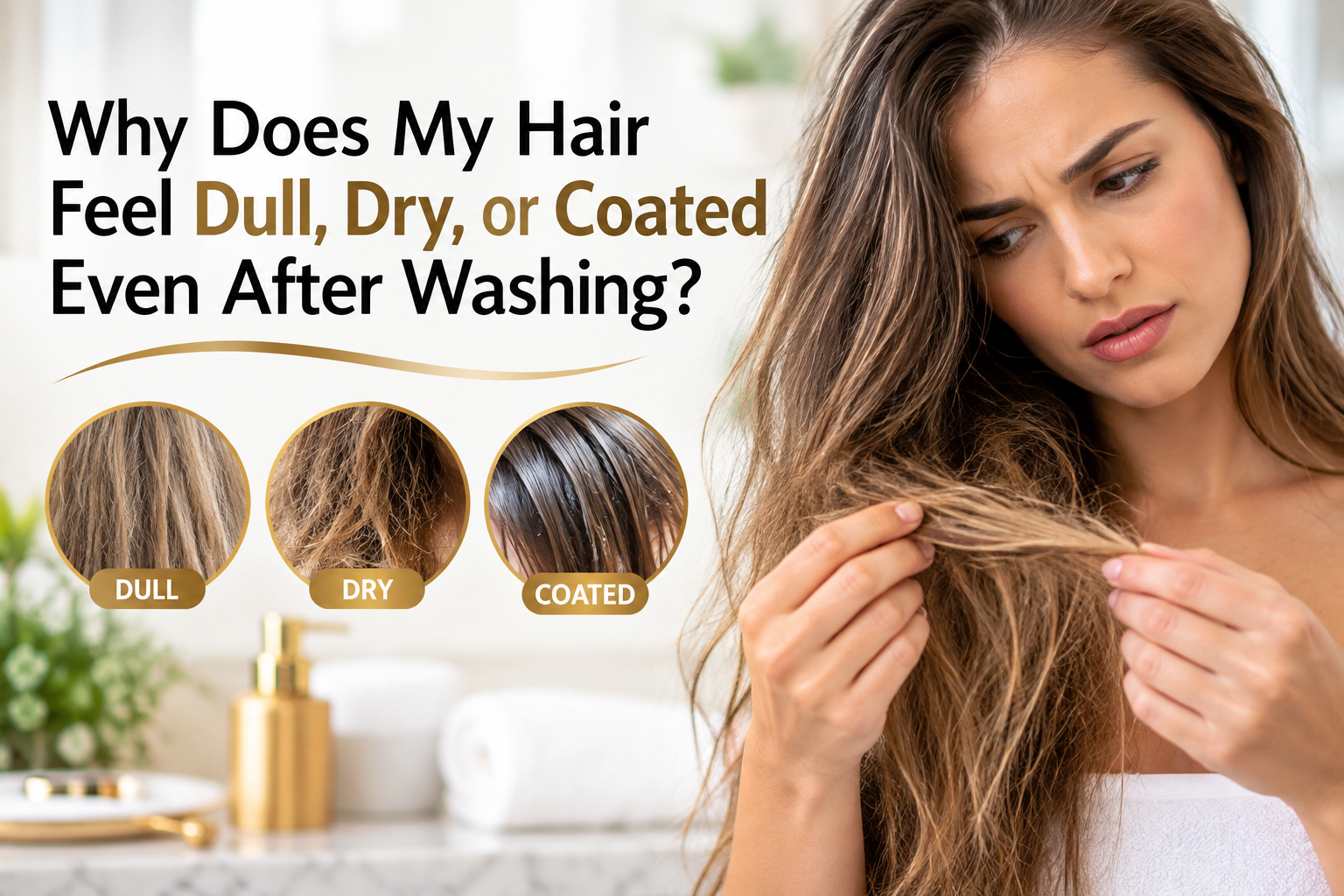
Why Does My Hair Feel Dull, Dry, or Coated Even After Washing?
You wash your hair, condition it, and use products intended to keep it looking and feeling healthy. Yet something still feels off.
Your hair may feel dull, dry, rough, heavy, coated, or increasingly difficult to manage. Perhaps it doesn't have the shine it once had, your styling products aren't working as well, or your hair simply doesn't feel completely clean after shampooing.
The first reaction is often to add something: more conditioner, a moisturizing mask, another serum, or a different styling product.
But sometimes your hair doesn't need another product layered onto it.
It may need accumulated residue removed.
Hard-water minerals, chlorine, styling products, and other impurities can gradually build up on the hair. Understanding where that buildup comes from—and how to remove it appropriately—can help you decide whether your regular hair-care routine needs an occasional deeper cleanse.
And if your hair is color-treated, there's another important consideration: not every clarifying shampoo is color-safe.
What Causes Buildup on Hair?
Your hair is exposed to much more than shampoo and conditioner.
Water, swimming, styling products, and your environment can all introduce substances that may remain on the hair. Regular shampooing removes much of what accumulates, but some residue can become more difficult to remove over time.
Several common sources deserve particular attention.
Hard-Water Minerals
Hard water contains higher concentrations of dissolved minerals, particularly calcium and magnesium.
Every time you shower or wash your hair, those minerals come into contact with it. With repeated exposure, mineral deposits can accumulate.
Depending on your hair and water conditions, you may notice that your hair begins to feel rough, coated, dull, or more difficult to manage.
This can be particularly confusing because you're washing your hair regularly, yet it still doesn't feel as clean or soft as you expect.
If this continues despite changing shampoos, conditioners, or styling products, your water may be part of the problem.
Chlorine Exposure
Swimming is another common source of unwanted buildup.
Chlorine is used to help maintain swimming-pool water, but repeated exposure can be challenging for hair. Frequent swimmers may notice changes in how their hair feels, including increased dryness, roughness, dullness, or difficulty managing it.
Chlorine exposure isn't limited to an occasional trip to the pool. Someone who swims several times a week is repeatedly exposing their hair to treated water.
That makes removing accumulated residue an important consideration in a swimmer's hair-care routine.
Styling-Product Buildup
Hairspray, mousse, gel, dry shampoo, oils, serums, leave-in conditioners, texture products, and other styling aids can help you achieve the look you want.
But they can also leave residue behind.
The more products you use—and the more frequently you use them—the greater the possibility that ordinary shampooing may not remove everything.
This can create an interesting cycle.
Your hair begins feeling heavy or difficult to style, so you use more styling products to correct the problem. Those additional products can contribute even more residue.
Eventually, what seems like a styling problem may actually be a cleansing problem.
7 Signs Your Hair May Have Excessive Buildup
Buildup doesn't always have one obvious symptom. Instead, you may notice gradual changes in your hair's appearance, texture, or behavior.
1. Your Hair Looks Dull
Healthy-looking hair naturally reflects light.
When residue accumulates on the surface of the hair, it may lose some of its natural-looking shine and appear flat or lackluster.
If your hair suddenly seems dull despite conditioning and styling, buildup is one possibility worth considering.
2. Your Hair Still Feels Coated After Shampooing
Freshly washed hair should feel clean.
If your hair continues to feel heavy, waxy, coated, or as though something remains on it immediately after washing, your regular shampoo may not be removing all the accumulated residue.
3. Your Hair Feels Rough or Unusually Dry
When hair feels dry, most people understandably reach for conditioner.
Sometimes that's exactly what the hair needs.
However, hair covered with mineral, chlorine, or styling-product residue may also feel rough or dry.
If you continually add conditioning products without seeing much improvement, it may be worth considering whether buildup is contributing to the problem.
4. Your Hair Has Become More Difficult to Manage
You know how your hair normally behaves.
When it suddenly becomes more difficult to comb, style, or control, something may have changed.
If your usual routine and products aren't producing the results they once did, accumulated residue could be one of several possible explanations.
5. Your Styling Products Aren't Performing as Expected
Sometimes the problem isn't the styling product.
It may be the surface you're applying it to.
Continually applying products over accumulated residue can make it increasingly difficult to achieve the results you want.
Before replacing everything in your hair-care routine, it may make sense to start with a cleaner foundation.
6. You Swim Regularly
If swimming is part of your routine, your hair receives repeated exposure to chlorine and other substances in pool water.
Even when you rinse your hair afterward, an occasional deeper cleansing may be helpful for removing residue that routine washing hasn't completely eliminated.
7. You Have Hard Water at Home
If your household has hard water, mineral exposure occurs every time you wash your hair.
Because the change can happen gradually, you may not immediately connect your hair's dullness, roughness, or coated feeling with your water.
If other explanations don't seem to fit, hard-water buildup is worth considering.
Why More Conditioner May Not Solve the Problem
There's an important distinction between hair that needs conditioning and hair that feels dry or rough because it's coated with buildup.
Both can feel unpleasant, but they don't necessarily require the same solution.
Conditioners and moisturizing treatments are designed to improve the feel and manageability of hair. They aren't necessarily designed to remove substantial mineral deposits, chlorine, or accumulated styling-product residue.
Adding oils, masks, conditioners, and serums over existing buildup can temporarily change how the hair feels without addressing what may be underneath.
This is why identifying the likely cause of a hair problem should come before continually adding more products.
Sometimes the solution isn't adding something.
Sometimes it's removing something.
When Should You Consider a Clarifying Shampoo?
Clarifying and purifying shampoos are designed to provide deeper cleansing than you might expect from an everyday shampoo.
They can help remove accumulated residue and provide a cleaner foundation for the rest of your hair-care routine.
A clarifying shampoo may be worth considering if you:
Regularly swim in chlorinated water * Have hard water at home * Frequently use multiple styling products * Notice persistent dullness * Experience a heavy or coated feeling after shampooing * Find that your normal styling products aren't performing as expected * Want an occasional deeper cleanse to remove accumulated residue
Clarifying doesn't necessarily mean shampooing your hair more frequently.
Washing more often and cleansing more effectively are not the same thing.
Instead, clarifying can be viewed as an occasional reset when your regular cleansing routine isn't adequately addressing accumulated buildup.
Color-Treated Hair Requires Another Consideration
If you color your hair, choosing a clarifying shampoo deserves additional attention.
It's easy to assume that all clarifying shampoos essentially perform the same job.
They don't.
Not every clarifying shampoo is formulated to be color-safe.
Clarifying shampoos are designed to provide deeper cleansing, and some formulas may be more aggressive than others. For someone who has invested time and money in professional or at-home hair color, choosing a clarifying shampoo solely because it promises powerful cleansing may not be the best approach.
Instead, consider two questions:
Will it remove the type of buildup I'm concerned about?
And:
Is it appropriate for color-treated hair?
This is particularly important when you need to remove hard-water minerals, chlorine, or styling-product residue but also want to maintain the appearance of your hair color.
Look for a clarifying or purifying shampoo specifically identified as color-safe, and follow the manufacturer's directions regarding frequency and proper use.
Deeper cleansing shouldn't require ignoring the needs of color-treated hair.
Clarifying Shampoo Isn't Necessarily Your Everyday Shampoo
Another common misconception is that once you discover buildup, you should replace your regular shampoo with a clarifying shampoo.
That's not necessarily the case.
Think about clarifying as a reset rather than automatically an everyday routine.
Your individual needs can depend on several factors, including:
* How often you swim * The mineral content of your water * How many styling products you use * How frequently you wash your hair * Whether your hair is chemically treated or color-treated
The specific directions for the clarifying product you choose
Someone who swims frequently or has significant hard-water exposure may have different cleansing needs than someone who uses very few styling products and has soft water.
The objective isn't to clarify as often as possible.
It's to clarify when appropriate.
Before Buying Another Hair Product, Ask Yourself These Questions
If your hair has become dull, dry-feeling, heavy, or difficult to manage, take a quick inventory of your routine.
Ask yourself:
Does my hair still feel coated immediately after shampooing?
Do I live in an area with hard water? Am I regularly exposed to chlorine?
Do I use several styling products between shampoos?
Have my normal products stopped performing the way they used to?
Am I continually adding conditioners or treatments without solving the problem?
Is my hair color-treated, meaning I should specifically look for a color-safe clarifying option?
If several of these questions describe your situation, buildup may be contributing to what you're experiencing.
That's when an appropriate purifying or clarifying shampoo may make sense.
A Color-Safe Professional Option to Consider
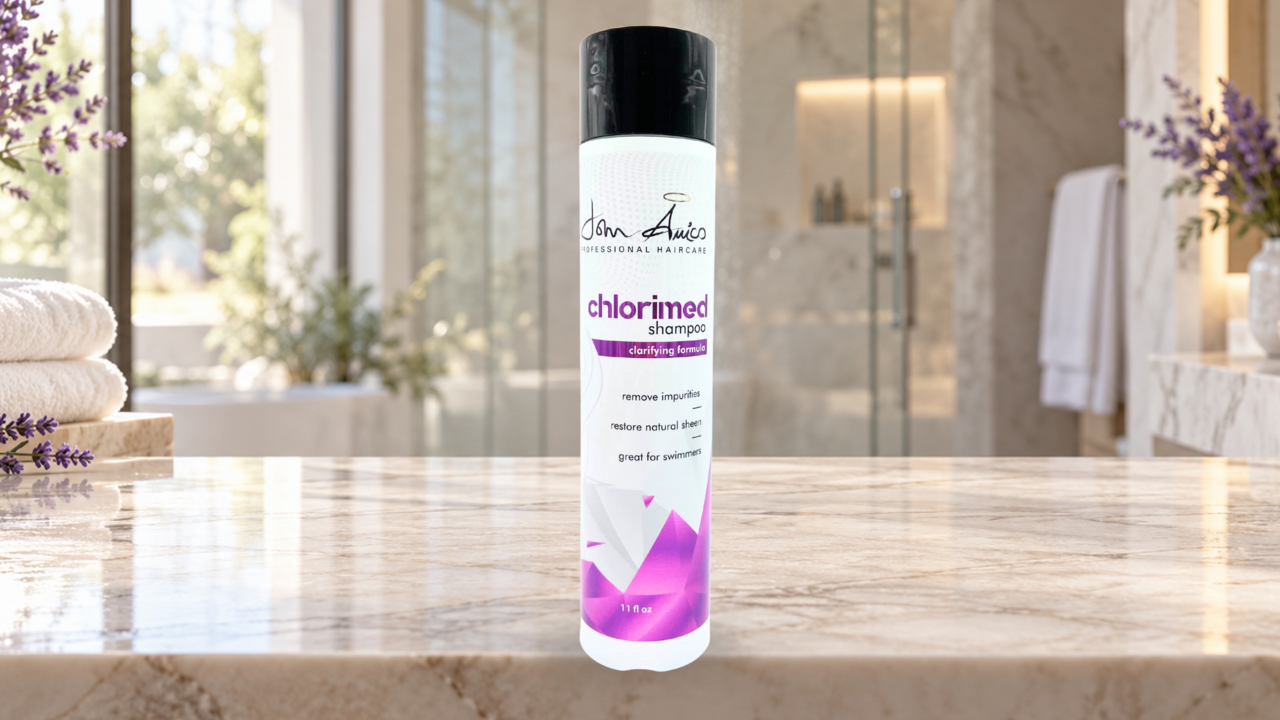
If you're dealing with hard-water minerals, chlorine, chemical impurities, styling-product buildup, or hair that simply feels coated and difficult to manage, one professional option worth considering is John Amico Chlorimed Purifying Shampoo.
An especially important distinction is that Chlorimed is color-safe.
That makes it particularly relevant for someone who wants the benefits of a purifying shampoo while also needing to consider color-treated hair.
Rather than continually adding more products over accumulated residue, a purifying shampoo can help give your hair-care routine a cleaner starting point.
Want to Learn More?
If the symptoms described in this article sound familiar, you can review Chlorimed's product information, directions, and current availability before deciding whether it fits your hair-care needs.
Learn More About Chlorimed Purifying Shampoo →]
Affiliate Disclosure:
This article may contain affiliate links. If you purchase through one of these links, I may earn a commission at no additional cost to you.
Product recommendations are provided to help you evaluate options based on the hair concerns discussed above.
The Bottom Line
When hair becomes dull, rough, heavy, coated, or difficult to manage, the instinct may be to add another conditioner, treatment, or styling product.
But more product isn't always the answer.
Hard-water minerals, chlorine, styling products, and other impurities can accumulate on the hair over time. When buildup is contributing to the problem, an appropriate clarifying or purifying shampoo can help provide the deeper cleansing your regular routine may not be providing.
If your hair is color-treated, however, don't assume every clarifying shampoo is color-safe. Check the product carefully and choose a formula designed with color-treated hair in mind.
The goal is not simply to cleanse more aggressively.
It's to identify what your hair needs, remove unwanted buildup appropriately, and choose a cleansing option compatible with your hair—including your hair color.
Before adding more to your hair, consider whether it's time to remove what's already there.